Showing posts with label Professor Interviews. Show all posts

Monday, September 23, 2013

Professor Interview: Jason Hart

AGSA student and faculty interviews are back! Throughout the semester AGSA will be interview a handful of students and professors and post the results here for all to enjoy.  We're hoping that these interviews will spark conversation and help connect us as a school which also uncovering some dirt on our fellow students and esteemed faculty. 


jasonFirst up is one of our newest studio professors Jason Hart, co-founder of CUBE design + research who is currently one of the graduate students sections of ARC 503: Comprehensive Studio.


Question: Tell us a little bit about yourself. Where did you grow up? Where did you attend school?

Jason: I was born in Macon, Georgia but grew up in Charleston, South Carolina and Central Florida. I first started college at a junior college in St. Petersburg, Florida and received my Associates degree in Architecture at St. Petersburg College, I then attended the University of Florida-Gainesville where I got my BA, before getting my Master's of Architecture at MIT.

Q: Why did you decide to do architecture?
Jason: I was one of those kids who at twelve decided they wanted to be an architect without really knowing what it was and then stuck with it; for better or for worse. 

Q: Why did you decide to start your own firm?

Jason: I think I wanted to stretch my own design abilities. I had worked for about 10 firms, both in the US and abroad. The last firm I was with I was a project manager for 5 years on large scale buildings, and I had been doing things in the background, my own projects, and desired to do my own thing. 

Q: What was your favorite firm/architect to work in?

Jason: The most impressionable was Renzo Piano, from a professional standpoint; culturally was Japan, I was there for 4 months  and the cultural shift [in Japan] was fascinating, both personally and in the work environment. Renzo really learned how to work with the clients and hot to emphasize the quality of architecture. 

Q: What brought you to teaching?

Jason: I started teaching about 12 years ago at MIT, first as a TA and teaching a sketching class. I have taught studio at Boston Architectural College and here at NCSU. I like teaching, it keeps me fresh because in an office you kind of get into a string of 6 month or 1 year projects and there isn't a lot of in-depth design aspects to it for the better part of the projects. So I like coming in here and seeing what you guys are doing and thinking about your projects. 

Q: In one sentence what is your approach to design/architecture?

Jason: Architecture in the end is always about the people, so I believe that thoughtful design can have a great impact on the daily life of people. 

Q: What is one piece of advice that you would give to students?

Jason: To any student it would be - Be persistent and tenacious in whatever drives you.

Q: What is your favorite building?

Jason: My top buildings in the world that I have experienced are: Couvent de la Tourette, Le Corbusier; The Pantheon, Rome; Hagia Sophia; and the Blue Mosque, Istanbul.


Thanks for talking with us Jason! Coming up next in our interview series, our first student interview of the semester with one of our new Track 3 students.

Monday, January 7, 2013

Professor Interviews: Pat Rand!

Welcome back!  Today's convocation marks the start of another rousing and raucous semester for the College of Design and our beloved School of Architecture!  We hope you spent your holiday in various states of relaxation, managed to see some cool buildings, and are returning ready to dive in to the icy studio waters, polar bear club style!

Back in December we were lucky enough to interview Pat Rand, FAIA, professor of many sought-after classes and the author of numerous books, with another currently underway.   We saved his interview to kick off the spring semester of the blog - hope you enjoy it!

Q: Where did you grow up? 
     Well, I was born in Kentucky, then I lived in New Jersey for 6 years during grade school, and I spent high school in Richmond, Virginia.  A variety of places. 

Q: What’s one thing you would tell your college self?
     I don’t know... I wouldn’t change anything necessarily.  I think I seized opportunities pretty well, I think I was optimally serious, but not too serious.  Maybe I'd tell myself to be prepared for the unexpected.  I think I expected to follow a certain path toward practice, and now I’m not practicing primarily.  So maybe be alert for certain opportunities, and be prepared for adjustments.


Q: Your book “Materials for Design” features case studies that exemplify different materials.  Which of the buildings you selected would you go see tomorrow if you had the chance?
     The one that’s on the cover, which is a glass house, is a ridiculous proposition; that one would build an entire house out of glass!  So I guess I might like to see it simply because of its unusualness, not because it’s exemplary.  I would never suggest that anyone do that ever again.  It’s called Laminata. 
     I was talking about the German Foreign Ministry in class just yesterday, describing some of the things that Jamie Carpenter did in the glass wall that I cannot see in even the really high quality photographs that we’ve got.  That’s one where I think he was doing some unusual things, putting in some partially reflective glass and some spectrally reflective glass that you can’t really photograph.  That’s one that would like to see in real life because I don’t think you can capture the glass qualities even with really good photographs.


Q: What’s something that surprised you while researching your most recent book?
How many really amazing projects are out there!  We picked the projects because they were engaging architecturally in general and they also used some material in some interesting way.  When you have a photograph that you keep zooming in on and it keeps revealing to you more stuff, that's inspiring.  How they invent a way to connect materials in a way that doesn’t interfere with the appreciation of the quality of the material.  Invention, by a good designer, occurs at every scale. 

Q: How do you take your coffee?
Black.  Strong and black.

Q: You have a free morning; no meetings, no student interviews, no classes to prepare for – what do you do?
     I don’t have too many of those.  When you’re working on a book it basically fills every free moment you might have.  If I have time I would take care of myself a little better, exercise a little, take the dog for a walk. 

Q: If you had to recommend a few books from your shelves to an aspiring architect, what would they be?
     Ching's "Form, Space and Order".  "The Visual Dictionary of Architecture" by Ching. They both explain concepts in a clear way.  Those aren’t terribly new books, but they do get across significant ideas and celebrate hand drawing as a way to communicate something about architecture.
Those are what I would recommend for the novice.  Start really simple and try not to scare them.  That will come later.

Q: Who is a contemporary architect whose work you look at and think “they’re doing it right”?
     These questions are so reductive, it makes it hard, because there are so many really powerful people that are doing really wonderful things.  Let’s see, the firms in the first book that impressed me a lot are a European, Despang Architekten comes to mind.  They do small, socially responsible, high quality designs that I admire.  Not over the top cost-wise, very environmentally respoinsible.  I look at their work and admire it greatly.  I really appreciate architects who tempt me with a big idea, with a big move but are worthy also at the close scale due to their rigorous refinements. 


From the new book we're writing there is an affordable housing project from South Africa that brings together a wood frame, packed sand bags as masonry, and an applied stucco surface.  The design boasts good proportions, small footprints with space to store bicycles, hang laundry, have space for a dog.  They way they built the walls, the occupants participated in packing the sand bags for their own home. It's not a textbook solution for how to make a cheap house, and it's very inventive.


Thanks so much, Pat!  See everyone at convocation this afternoon!


Friday, October 19, 2012

Professor Interview: Dr. Paul Tesar!

This week we're excited to feature an interview with Dr. Paul Tesar, one of our school's most well-loved and esteemed professors.  Thank you, Dr. Tesar for spending the morning with us answering our questions.

Q: Where did you grow up? What was your favorite part of growing up there?

I grew up in Vienna, the capital of Austria.  In retrospect being there made it apparent that growing up in a city with so many historical layers that are manifested in so many ideologies - political, social, psychological - made me aware of the complexity of the world.  I didn’t grow up in a one-dimensional environment.  The fact that we have traces of Roman times, Romanesque, the period of the middle ages, the Baroque, the 10th century, layered on top of one another produced a totally different world view.


Q: How have your architectural priorities changed from when you were fresh in the field to now?
Well, I started architect school in 1960 it was the height of the modernist, functionalist thinking.  I accepted that premise more or less without question; it made sense, form follows function, who could argue with that?  As I developed and grew older, I started questioning that; realizing it’s a bit more complicated.  One thing that started creeping in was the notion of how culture influences architecture. It’s not just about program, construction, economics.

Q: If you could take your students to see one work of historical architecture, what would it be?  What about one work of modern architecture?
One building that totally overwhelms me is the cathedral in Sienna, Tuscany.  As a spatial experience, the light, materiality, spirituality of the space was palpable and overwhelming.  Off the top of my head, that’s the one, although there are a half dozen others I could mention in the same breath.

The interior space of the Berlin Philharmonic, by Hans Scharoun.  From the outside it’s this awkward, bulky looking building that looks like a stranded whale.  But when you enter, it’s this incredible space designed for music.  Musical space.   You walk in and its one of the few modernist spaces that made me weak in my knees, start tearing up.  Walking in, I thought “Oh my god”.


Q: How do you take your coffee? 
Right here black, without anything.  In Europe one of my favorite places is Nannini, in Sienna.  It’s a coffee bar close to the Piazza del Campo, and they have an espresso machine that seems to be 15 ft long.  The whole places smells like cappuccinos and lattes.  There I get a cappuccino with some pan forte, the sort of local fruit cake, which is much better than American fruit cake.

Q: Is there some lesson that you learned at one point in your career that you’ve returned to many times since?
It may be self defeating, but sometimes I feel what architects take as very important and spend a lot of time and effort on doesn’t seem to matter all that much in life, in a more general perspective.  I feel we are sometimes racking our brains about things that matter very little to most other people.

Another one is that particularly in dwelling the notion of comfort its more important than we generally give it credit.  Comfort over image.  Right now it’s the other way around, may things we admire I feel I wouldn’t want to live there.

Q: From what do you draw daily inspiration?
In general I have to say from animals.  I love animals, I love to watch animals, their directness, their innocence, their sweetness.  I always feel that they have qualities that I wish human beings have but most often don’t.  Interactions with animals makes us more human, and the reverse can also be true.

Q: If you could host your studio in one city (without the interference of the study abroad office), what would it be?  Why?
I would have to say so many cities in India have impressed me, particularly Ahmedabad.  I was impressed with the vivacity of the urban life there. When I’ve been there I’ve had a feeling of a spiritual experience amidst the buzz of ordinary life, of children on motorbikes, and donkeys and camels and cows and people and vendors. Rather than being spiritually inspired by cathedrals, I felt this experience in the middle of the Indian street.  Call it spirituality form below rather than above.  It rose in my body from the sensuality of the place rather than from intellectual and religions feelings. 


Q: What is your favorite non-architecture book?
One book that I keep coming back to is wonderful book by the author Martin Buber called I and Thou.  Ich und Du.  Not a book about religion but rather about how we relate to the world, how we relate to each other.  About the basic philosophy of relation and says we can enter two kinds of experience; an “I-You” relationship, or an “I-It” relationship.  Fascinating.


Thank you for contributing to our interview series, Dr. Tesar!


Monday, September 17, 2012

Professor Interviews: Burak Erdim!

Last week we kicked off our interview series with student Julie Barghout, and this week we're excited to bring you our first professor interview!  It seemed only fitting that we track down Burak Erdim, our school's newest faculty member and the man trusted with teaching the seminal Modern Architecture class.  A sincere thank you to Professor Erdim for his thoughtful answers to our questions!

Q: Where did you grow up?  What was your favorite thing about growing up there?
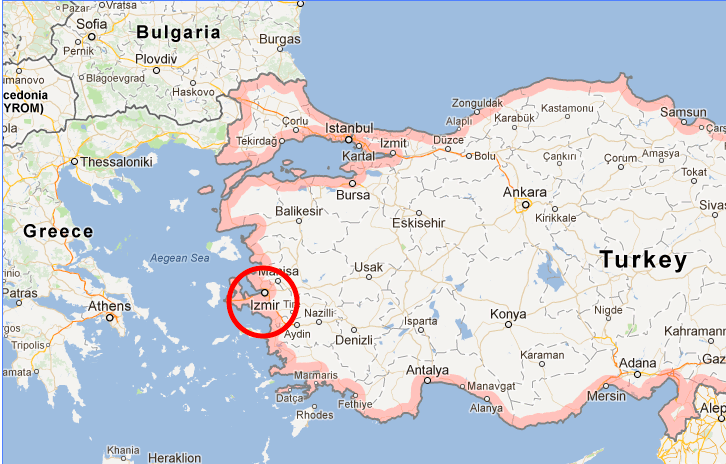
Burak: I grew up Izmir Turkey, a little port town on the west coast of Turkey.  My favorite thing was playing hide and seek in the neighborhood... we could still play on the street during summer afternoons and our parents didn’t have to worry. Izmir wraps around the bay so getting around the city you take a ferry to get to downtown, that was also one of my favorite things to do in the city.


Q: Who was your most influential teacher/mentor?  Why?
Burak: I am an architect and an architectural historian so I have two.  First architect Christ Rischer Junior, who was the main important professor at Mississippi State where I got my undergraduate degree.  Second is Dell Upton (@ UVA) for history.  Both of them were independent thinkers and they read a lot.  That is something that is important for us as architects, don’t let go of the reading!  We have to do a lot but reading allows us to engage and not get stuck at our desks, and that independent thinking gave them a vision to way to look at things in a new and penetrating way. Dell knew what I was doing with my dissertation long before I did!

Q: If you could take your history students to see one work of historical architecture, what would it be?  What about one work of modern architecture?
Burak: Historical architecture would be the grand bazaar, or grand market in Istanbul, it’s the quintessential non object space, you know when you are entering it, its like the skin of the city. 
Modern building would be the Whitney Museum of American Art In New York because of its connection to the city.  It creates this unique space between the building and city at the sidewalk; you enter the building through a bridge, and there is a cafĂ© sunken in the space between the sidewalk and building and creates this wonderful urban zone. It has a great relationship; it acknowledges that there needs to be something between the building and the city.
 (Whitney Museum)

Q: If you could sit in on a class this semester, which would it be?
Burak: I still need to get to know more about the classes, but at the new faculty meeting I met Maria Pramaggiore and she teaches film classes in the English department, and I would love to take some of her classes.

Q. How do you take your coffee?
Burak: On an every day basis I will end up drinking anything that resembles coffee, but it you are asking what the ideal cup of coffee is it would have to be Turkish coffee Az Sekerli (which means little sugar) and a cup of water.

Q: Did you take advantage of office hours when you were an undergrad?
Burak: I didn’t know they existed!  I think it’s a missed opportunity.  I have office hours now because I think its important to make time so that students know when you are available.

Q: What are you most looking forward to doing once you finish and defend your dissertation? 
Burak: SO many things!  One thing is that I won’t have to say "I’m going to finish it on such-and-such a date" - I’ll be done.  I also used to go on long runs on weekends so I look forward to using those runs  to get to know Raleigh - it’s a great way to see new things in a town.

Q: As you see it, what is history’s role in the practice of architecture today?
Burak: I think, this is what I try and do in my class, we have to talk about architecture and provide the methodologies for students to be able to think of architecture as a social and economic product, so that when we make buildings or an intervention on a site we can engage those parts of the site, and think about how we engage the larger part of the world.  This allows us to engage our profession as a citizen, how things actually exist in the built environment; laws and zoning, for when we design specific types of buildings, methods that allow us to engage and analyze architecture as a social product.

Q: What’s your favorite non-architecture book?
Burak: It's been a while since I have had time to develop those favorites! I love reading the New Yorker, any type of serious newspaper, but in terms of short fiction, Paul Bowles was a favorite.  He was a self inflicted exile, lived in Morocco, a new Yorker in Morocco. Musician/composer turned writer. He has great short stories that I really like, The Sheltering Sky comes to mind.


Thank you so much, Professor Erdim!